
Reflections on 2025 and lessons for 2026

In 2026, Don’t forget the Why
As I write this, we’re bunkered down in sub-zero temperatures, the holiday season is well behind us, and I have a few quiet moments to step back and talk with you about last year, the year ahead, what we’re paying attention to — and, just as importantly, what we believe truly matters for you.
I’ll confess, I’m also feeling a little jealous of our snowbirds reading this from Florida, Texas, and Arizona. And if you call and I don’t respond right away… it’s probably because I’m mad and jealous. (Just kidding.)
To start with, I’m happy to report that 2025 was another very successful year in the ongoing pursuit of what really matters most to you — your long-term financial goals.
As always, our plan (and your portfolio) continues to be driven by those goals — not by predictions about the economy, interest rates, elections, or whatever happens to be dominating the headlines at the moment.
We believe the core ingredient in any investment plan is the ‘Why’
Why we’re investing, what the money is for, and when you’ll need it.
DIY investors often miss this step, which is why the rest of the “portfolio strategy” can fall apart at the first sign of market pressure.
By anchoring your plan to clearly defined goals, it’s built to hold together through uncertainty, and we certainly had our fair share of this this year. That focus won’t change next year, or the year after that, either.
With that in mind, before I share a few thoughts on the current environment, I want to briefly re-state the core principles that guide everything we do with your money.
Our investment Philosophy (The Constant
At the heart of our approach is a simple idea: we are long-term, goal-focused, plan-driven investors.
We pursue your goals by investing in broadly diversified portfolios of quality investments, designed to grow steadily over time.
We also believe the economy cannot be consistently forecast, markets cannot be consistently timed, and there is no reliable pattern in how markets react to — or completely ignore — economic developments.
Because of that, the only realistic way to capture the long-term return value of your portfolio is to stay invested through inevitable ups and downs. Those declines can be uncomfortable, but history shows they have always been temporary.
We use a system called Nitrogen (formerly known as Riskalyze) to test your ability to stick with downturns and then adjust the portfolio if we both feel the impact of the loss from the downturns exceeds your desire or need to wait for the recovery.
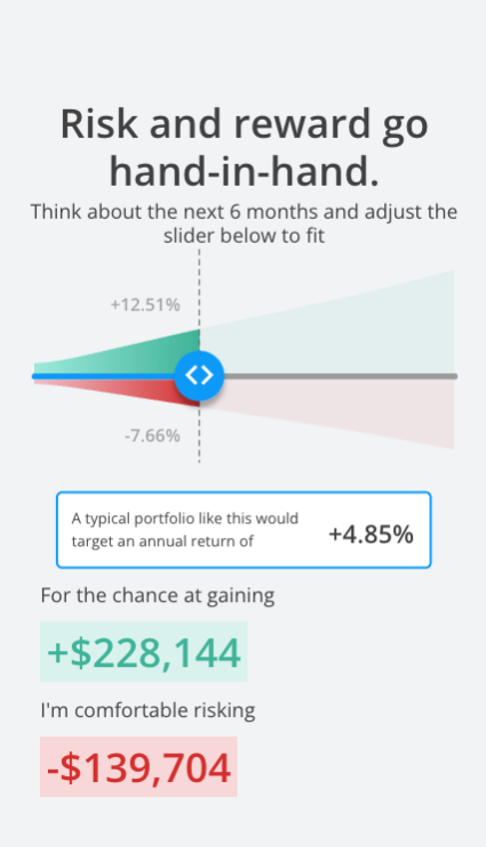
This is the essence of our mantra: prepare, don’t repair.
That’s why we don’t react to economic or market events, and we don’t try to anticipate
them.
As long as your long-term goals remain the same, our plan fundamentally stays the same. And as long as the plan stays the same, so does the core of your portfolio — aside from disciplined, periodic rebalancing.
We believe deeply in the power of long-term compounding, and we’re mindful of Charlie Munger’s advice: “The first law of compounding is to never interrupt it unnecessarily.”
A Snapshot of Where Things Stand Today
In 2025, the broad equity market completed its third straight year of double-digit returns, driven by a strong economy and significantly increased corporate earnings.
This is despite an almost 20% loss in April of this year due to concerns about tariffs and their long-term impact on the profitability of the companies we are investing in. Seems like a distant memory know, doesn’t it?
Looking ahead, analysts are forecasting earnings growth approaching 15% in both 2026 and 2027 (source: Yardeni Research). Somewhat remarkable, corporate profit margins have also continued to expand, reaching 13.1% in the third quarter of 2025, the highest level in 15 years (source: FactSet).
One would have thought that inflation in companies’ costs colliding with a straitened consumer’s resistance to price increases would have been a significant headwind here. So far, at least, one would have been quite wrong.
The single important weak spot has been the employment picture, which has continued to soften. But even this has its significant bright side: strong economic growth and a flattish employment situation mean that per capita productivity has been rising strongly. Unemployment may have recently ticked up to 4.7%, but the other 95%-plus of the workforce is putting out significantly increased products/services per hour; that allows companies to raise wages without triggering inflation
On the policy front, after six straight rate cuts, Federal Reserve monetary policy is now 175 basis points looser than it was a year ago, even with CPI inflation still hovering near three percent. It’s reasonable to expect the lagged effects of that easing to begin showing up in 2026.
The middle class in particular is set to enjoy tax refunds this filing season which have been variously estimated around $150 billion, or half a percentage point bump in GDP. The main engines of this are a higher standard deduction and (especially) a temporary restoration of the SALT tax deduction cap to $40,000 from $10,000. This would seem to be a potentially meaningful near-term economic tailwind
💡 About the Headlines (and the ‘Big Question)
If much of this comes as news, you’re not alone — with the exception of the softening labor market, which has dominated headlines.
In our view, that says more about the nature of financial journalism than the economy itself. Negative stories get attention; steady progress rarely does. This is not a new phenomenon. Telling you to be scared is tale as old as time. (we are Disney family so pardon the reference)
The fact remains that a very strongly rising equity market may (and indeed should) have taken these data into account—and maybe then some. Thus, the burning question all year long was “Are we in an AI bubble?” This replaced the previous year’s burning question “When and by how much will the Fed cut rates?” Which in turn replaced 2023’s “Will there be a recession?”.
There was no recession, but that’s almost beside the point. The universal “burning question” is usually the wrong one — and often a distraction for long-term, well-diversified investors like us.
Market Concentration, Valuations, and Discipline
There’s no question that today’s market is more concentrated in a handful of large technology stocks than at any point in our investing lifetimes — and that not all of them can win the AI race. It’s also true that this concentration has pushed valuations toward the upper end of historical ranges.
Our response is straightforward. First, valuation has never been — and will never be — an effective market-timing tool. Second, your upcoming portfolio rebalancing will address this concentration in a disciplined, intentional way.
All of this suggests that the next significant market shock — and there always is one (they seem to arrive with almost the frequency of a Michigan winter) will likely come from deep left field. In other words, an unknown unknown, rather than a known unknown like valuation or the national debt.
As Morgan Housel says, “Risk is what’s left over when you think you’ve thought of everything.”
And like every shock before it — and everyone still to come — it will have very little to do with us, other than presenting an opportunity to rebalance and, at times, go bargain-hunting after prices fall.
Parting Thoughts
We continue to follow a plan that has worked over the very long run — not because it avoids volatility, but because it helps investors reach their goals through it.
We don’t believe “this time is different.” We don’t retreat to cash during market panics.
And we don’t bet the ranch on “new-era” miracles — including AI.
Instead, we stay disciplined. We don’t succumb to FOMO, and we don’t panic — because we’ve prepared, not repaired (yes, that mantra again).
We wish all our friends and clients — because to us they’re the same thing — a healthy, happy, and prosperous 2026.
As always, if questions or concerns come up, we’re here.
Thank you for the trust you place in us. It’s a privilege to serve you.
Federal LEO Retirement Security Alert
3 critical mistakes costing federal LEOs thousands each month
Ready to Plan Your Next Mission?
Request your FREE GS-Retirement Blueprint
Similar Posts


Should Federal Employees Invest in Gold in Their TSP?
By
Anthony Bucci
|
February 3, 2026
|
Reading Time: 4 min readWith gold prices making headlines, many federal employees are asking whether investing in gold through their TSP makes sense. Let’s…


The G Fund Trap: Why Federal Employees Struggle to Become TSP Millionaires
By
Anthony Bucci
|
March 12, 2026
|
Reading Time: 6 min readLast year, I wrote an article called “Becoming a TSP Millionaire Isn’t as Hard as You Think—It’s Much Harder”. In…


Don’t Wing It: Create you TSP Investment Policy Statement
By
Anthony Bucci
|
March 16, 2026
|
Reading Time: 7 min readIf you’re like many federal employees I know, you’ve been managing your own retirement savings for quite a while. You’ve…